



Breakthrough in One-Line Hybrid Rice: Achieving Near-100% Clonal Seed Production with Normal Seed Set
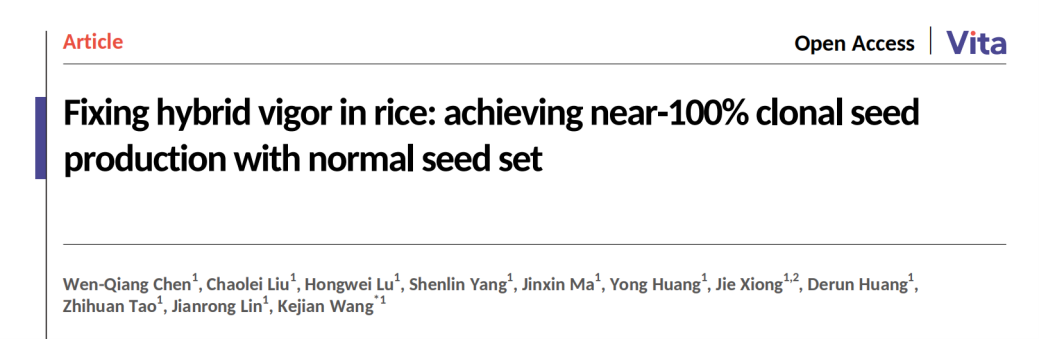
On July 21, 2026, the research team led by Wang Kejian, the professor of China National Rice Research Institute (CNRRI), and also the Deputy Director General of CNRRI, published the journal's first plant science paper, titled "Fixing Hybrid Vigor in Rice: Achieving Near-100% Clonal Seed Production with Normal Seed Set" in Vita. Utilizing the identified endogenous rice gene "HUAXU," the team established a Fix8 synthetic apomixis system and developed the concept variety "Yixi No.1". The variety achieved a stable cloning efficiency of over 99% while maintaining a normal seed-setting rate, marking a major breakthrough in the development of the "one-line" method for hybrid rice breeding.
In 1986, Academician Yuan Longping proposed the "three-line" "two-line" and "one-line" strategic framework for hybrid rice breeding. The "one-line" approach relies on apomixis to fix heterosis, allowing the benefits of a single hybridization to be maintained across generations. However, for this concept to be widely adopted, the industry universally recognizes that a critical milestone must be achieved: achieving a stable seed-cloning efficiency of nearly 100%, while maintaining normal seed set and yield.
Since 2013, the team has pursued research under the "One-line Hybrid Rice Exploration Program" and successfully developed the first hybrid rice system capable of apomixis, named Fix, in 2017, producing the world's first cloned seed of hybrid rice. After the findings were published in 2019, Academician Yuan Longping commented, "This work demonstrates the feasibility of apomixis in hybrid rice," and encouraged the team to "continue your efforts to address the remaining challenges and accelerate the commercial application of one-line hybrid rice." Subsequently, the team established a series of systems, including Fix2, Fix3, Fix4, Fix5, Fix6, and Fix7, focusing on identifying novel genes and overcoming the key challenges of achieving nearly 100% cloning efficiency while maintaining normal seed set. These efforts laid the groundwork for the practical application of one-line hybrid rice.
Efficient, Low-Side-Effect Parthenogenesis Induction: Challenges in Synthetic Apomixis
Currently, two strategies for achieving apomixis in hybrid rice face significant challenges. The first is a genome-editing-only system, which combines the knockout of meiosis-related genes to obtain MiMe with the knockout of fertilization-related genes to induce haploidy, but it generally results in low cloning efficiency. The second combines MiMe with the expression of parthenogenesis-inducing genes, such as BBM1, in egg cells. Although this approach can achieve high cloning efficiency, it often results in reduced seed-setting rates. In China, seed purity standards are ≥97% for hybrid rice and≥99% for conventional rice . It is virtually impossible to ensure that the existing system consistently meets these standards while maintaining a normal seed set . Therefore, the one-line method requires parthenogenesis-inducing factors with broader applicability, higher induction efficiency, and fewer side effects to achieve stable cloning efficiency close to 100% while maintaining normal seed set.
The "HUAXU" Gene: A Key to High-Efficiency, Low-Side-Effect Parthenogenetic Induction
The scientific community has long hypothesized that sperm may carry key transcriptional signals essential for initiating embryonic development. However, all known genes capable of inducing parthenogenesis when expressed in rice egg cells (such as BBM1) are widely expressed, with functions extending beyond the initial stages of embryogenesis. These findings raise a critical question: Is there a specific factor exclusively dedicated to initiating embryogenesis?
Such sperm or early embryo-specific factors could potentially be harnessed to engineer apomixis with nearly 100% cloning efficiency. To address this, the research team identified the transcription factor "HUAXU" through multi-omics screening. This factor is specifically expressed in sperm cells, absent in egg cells, extremely low in zygotes, and completely undetectable in other tissues, perfectly aligning with the ideal model of "embryonic trigger by sperm delivery." The gene name is derived from HUAXU, a figure in Chinese mythology who "left great footprints to give birth to Fuxi," a legend that embodies the concept of life arising without paternal involvement—a notion that resonates with the mechanism of parthenogenesis.
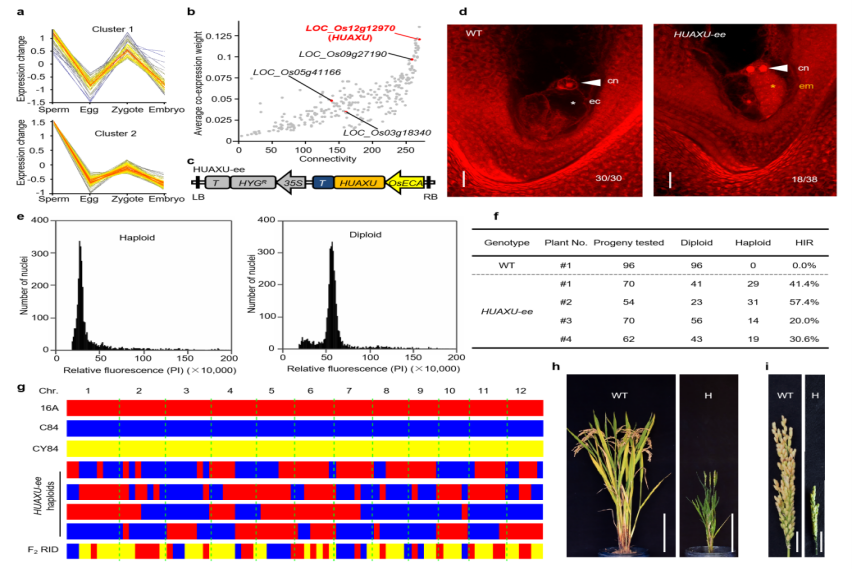
Figure 1. Ectopic expression of HUAXU in egg cells efficiently induces parthenogenesis and haploid formation
To verify whether ectopic expression of HUAXU in egg cells could induce parthenogenesis, the team constructed a vector utilizing the rice egg cell-specific promoter OsECA to drive HUAXU expression and transformed it into the three-line hybrid rice variety "Chunyou 84," resulting in four independent lines. The efficiency of autonomous development of unfertilized egg cells into embryos reached 47.4% in the T0 generation; the proportion of haploids among self-fertilized offspring ranged from 20.0% to 57.4%, while the seed-setting rate remained unaffected in some lines.
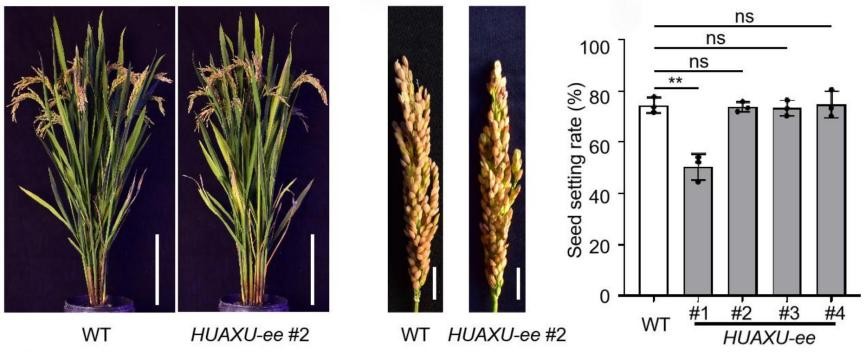
Figure 2. Ectopic expression of HUAXU in egg cells does not affect seed set in certain lines
Fix 8: Consistently Achieving Over 99% Cloning Efficiency
The study combined egg-cell expression of HUAXU with MiMe system (knockout of OSD1, PAIR1, and REC8) and introduced the resulting construct into the hybrid rice variety "Chunyou 84", generating five Fix8 (Fixation of Hybrids 8) lines, all of whose offspring were diploid clones. The cloning efficiency of three T2 populations (1104,1180), and 806 plants, respectively ranged from 99.7% to 99.8%, exceeding the commercial standards of 97% for hybrid rice seeds and 99% for conventional rice seeds. Tests across multiple cultivars and lines, including five other high-quality hybrid rice varieties with different parental backgrounds and a total of 23 lines, showed that Fix8 consistently achieved nearly 100% cloning efficiency. More encouragingly, certain lines showed no differences from the control in seed-setting rates and agronomic traits across multiple years and locations. Even under field conditions, their cloning efficiency, seed-setting rates, and field performance remained stable.
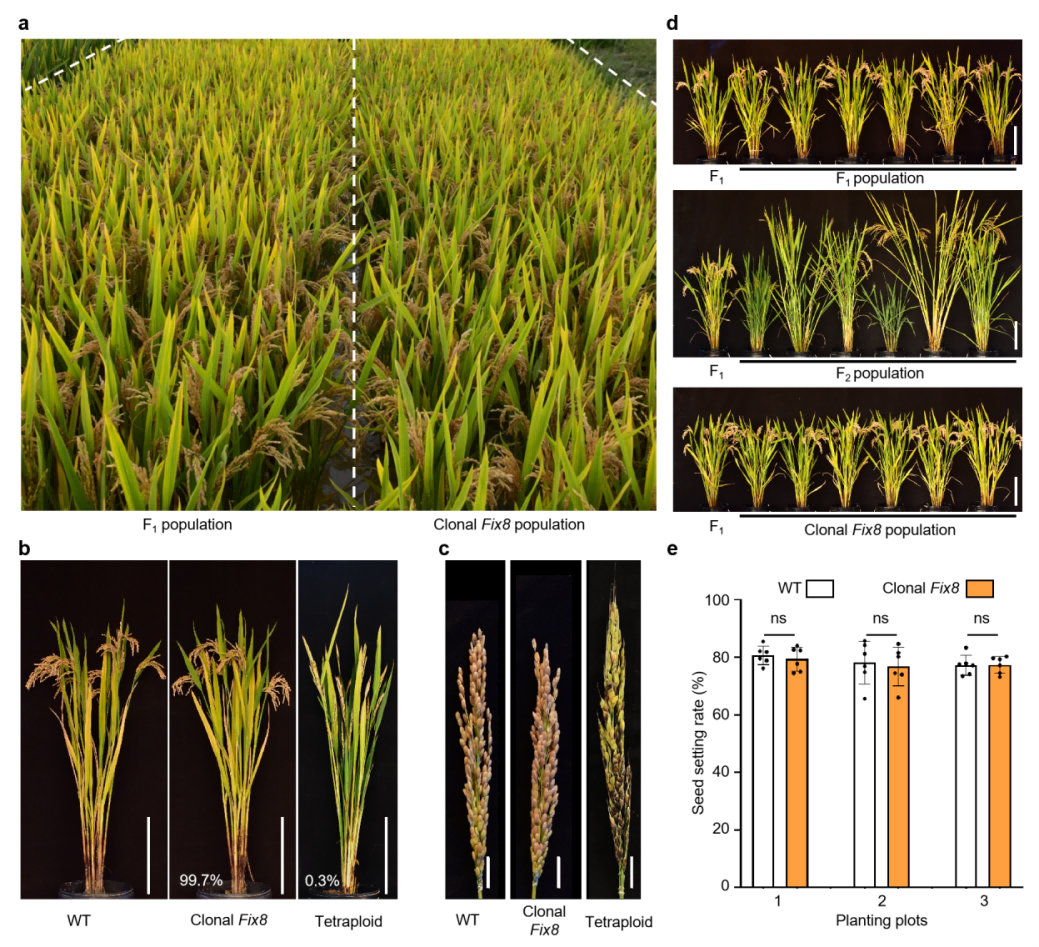
Figure 3. Fix8 exhibits a stable cloning efficiency above 99% and normal seed-setting rates in certain lines.
Although all Fix8 lines exhibited nearly 100% cloning efficiency, seed-setting rates were severely reduced in most lines, with some varieties failing to produce plants with normal seed set. The research team hypothesized that excessive HUAXU expression driven by the OsECA promoter might be the primary cause of the reduced seed-setting phenotype. To address this issue, they screened for novel endogenous egg cell-specific promoters, optimized gene expression levels, and developed Fix8_Plus2 (conceptual variety name "Yixi No.1"). Following this optimization, most lines maintained cloning efficiencies close to 100% while achieving yields comparable to those of normal plants. Continuous cultivation demonstrated that these traits could be stably inherited across subsequent generations. This achievement signifies that the two core objectives long pursued by the "One-Line Method"—maintaining nearly 100% cloning efficiency and normal seed set—have now been achieved simultaneously.
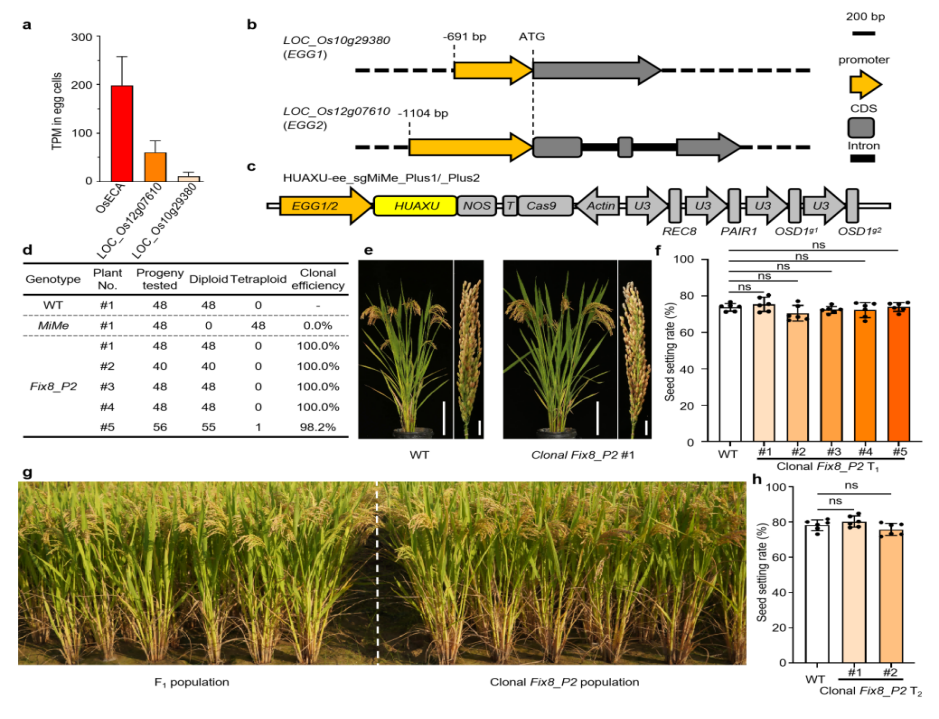
Figure 4. Yixi No.1 maintains nearly 100% cloning efficiency and normal seed set
In conclusion, the endogenous gene HUAXU identified in this study, combined with the MiMe system, led to the development of Fix8 and its upgraded version Fix8_Plus2, achieving nearly 100% cloning efficiency across multiple varieties, lines, and generations. This provides a stable and efficient strategy for permanently fixing rice heterosis. This breakthrough not only overcomes a critical bottleneck in realizing one-line hybrid rice but also provides a potential strategy for synthetic apomixis breeding in other crops.
In the future, the team will continue to optimize and refine their approaches, focusing on the precise regulation of the endogenous HUAXU gene and the development of marker-free editing technologies without exogenous DNA integration. They will also conduct extensive multi-site field validation over multiple years, ultimately developing a series of safe and stable one-line hybrid rice varieties without exogenous sequences.
This year marks the 60th anniversary of Academician Yuan Longping, known as the "Father of Hybrid Rice," proposing the theory of utilizing male-sterile lines for hybrid rice breeding, and the 40th anniversary of his proposal of the one-line method for hybrid rice development. In the acknowledgments section, the authors express their deepest respect to the late Academician Yuan Longping and acknowledge his encouragement and guidance to the research team. The research was supported by grants from the National Natural Science Foundation of China, the National Key Research and Development Program, the National Rice Industry Technology System, and the Scientific Innovation Project of the Chinese Academy of Agricultural Sciences. Professor Kejian Wang from the China National Rice Research Institute served as the corresponding author, while Dr. Wen-Qiang Chen was the first author. Part of this work was released as Chinese and English preprints on the ChinaXiv and bioRxiv platforms on October 16 and 17, 2025, respectively.
Article link: https://doi.org/10.15302/vita.2026.07.0053
CNRRI Today
Copyright © 2014- China National Rice Research Institute


